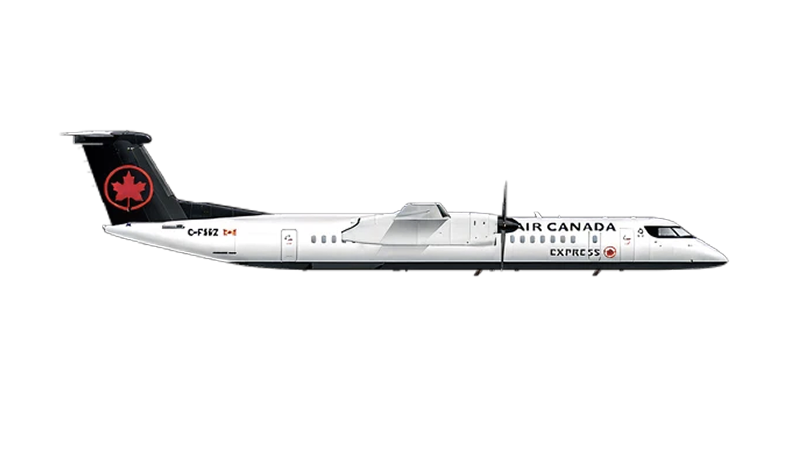
Dash 8‑400 Checklist Light

De Havilland Dash 8‑400 (Q400)

Comprehensive Normal & Abnormal Checklist ASOP
For flight‑simulation training only – NOT for real‑world aviation use.
Version 1.0 – 28 Mar 2026

How to Use

  1. Flows first – complete the panel flow silently.
  2. Challenge/Response checklist – verify critical items.
  3. Read‑and‑do checklist – any blue‑striped (memory) item.
  4. Keep PF heads‑up whenever aircraft is moving.

Legend

  • PF – Pilot Flying PM – Pilot Monitoring
  • Italic – Call‑outs Bold – Memory item/trigger
  • (A) – Automatic call/alert (M) – Manoeuvre

Normal Operations Checklists

1 Power‑Up / Acceptance

ItemAction
Parking BrakeSET
Battery MasterON (verify ≥24 V)
External PowerON (if AVAIL)
APUSTART → ON BUS
Avionics MasterON
IRSNAV
OxygenTESTED, 100 %
Gear Pins / CoversREMOVED & STOWED

2 Preliminary Cockpit Preparation

ItemAction
CVRTest
Emergency Exit LightsARMED
CAS MessagesCHECKED (no red/amber)
ELTARMED
Fire ExtinguishersCHECKED

3 Cockpit Preparation (Flows)

Panel FlowAction
Overhead (W‑pattern) → Forward Panel → PedestalComplete flow pattern
Fuel Boost PumpsON (verify qty)
Hydraulic Pumps (#1 & #2)ON
Bleed AirAUTO
PressurizationAUTO
Window / Pitot HeatOFF (until engine start)
FMS PreflightCOMPLETE
Radios / NAVAIDsSET
Checklist ItemResponse
”Cockpit preparation checklist.”PM initiates
Gear pins & coversRemoved
IRSAligned
Fuel qty_____ kg, balanced
Take‑off briefingCompleted
ChecklistComplete

4 Before Start

PF TriggersPM Response
Flight Deck DoorCLOSED & LOCKED
Fuel___ KGS, Pumps ON
Passenger SignsON
Condition LeversSTART & FEATHER
Power LeversDISC
Anti‑collision BeaconON
Parking BrakeSET

5 Engine Start (PW150A – FADEC)

StepAction
Condition Lever (Eng 1)START & FEATHER
Start ButtonPUSH
MonitorNg rotation rising
At ~52 % NgCondition Lever → FLIGHT IDLE (fuel introduction)
MonitorITT rise <10 s, oil pressure rising
FADEC auto‑cutout~63 % Ng – starter disengages
Engine 2Repeat procedure
Both stableCondition Levers → MAX (1020 RPM)
Aborted Start – Condition Lever FUEL OFF immediately. Max ITT start limit 1000 °C. Min 30 s between start attempts.

6 After Start

ItemAction
APUOFF (if not required)
GeneratorsON
Pitot / Stall HeatON
Anti‑IceAS REQD
Flight ControlsCHECKED (full travel)
FlapsT/O CONFIG (5° or 15°)
Stabilizer Trim___ UNITS
NWSON
BleedsNORM
Checklist ItemResponse
”After‑start checklist.”PM initiates
Anti‑ice____
Rudder & aileron trimZero
Flaps__/____
Stabilizer trim__ units
RecallChecked
AutobrakeRTO

7 Taxi

ItemLimit
Condition LeversMAX (1020 RPM)
Taxi Speed straight≤ 25 kt
Turns≤ 10 kt
Nosewheel SteeringTILLER / RUDDER PEDALS
Brake check at first movement “Brakes checked, pressure ___“.

8 Before Take‑Off – Up to the Line

ItemAction
AutofeatherARMED (green light)
Flight ControlsCHECKED
V‑SpeedsANNOUNCED (V1 / VR / V2)
FlapsCONFIRM setting, GREEN LIGHT
Stabilizer Trim___ UNITS
CabinSECURE

9 Before Take‑Off – Below the Line (entering runway)

ItemAction
TCASTA/RA
StrobesON
Landing LightsON
TransponderTA/RA
Completion Call”Cabin ready, below‑the‑line complete.”

10 Take‑Off Roll & Initial Climb (Call‑Out Memory)

PMPF
”80 knots""Checked"
"V 1"
"Rotate”Rotate to ≈10° pitch
”Positive climb""Gear up”

11 After Take‑Off / Climb

TriggerAction
Acc Alt reachedClimb Power
Flap retractionOn schedule (speed bugs)
Condition Levers900 RPM (climb)
AutofeatherOFF (above 400 ft AGL)
BleedsNORM
10 000 ft”10 000 – Lights off.”
STD QNHSET both (above trans alt)

12 Cruise (Hourly)

ItemAction
Condition Levers850 RPM (cruise)
Fuel checkFOB vs Plan (±300 kg)
SystemsCAS green
Waypoint sequenceNEXT & ETA compare

13 Descent Preparation

ItemAction
ATIS / STARRECEIVED & INSERTED
Approach BriefingCOMPLETED
Landing DataVREF ___, Minimums ___
PressurizationLAND ALT ___
GPWS Flap OverrideAS REQD
RecallCHECKED

14 Approach Checklist

ItemResponse
AltimetersSet (QNH)
Minimums__ ft
Condition LeversMAX (1020 RPM)
GearDOWN (below 200 KIAS)
Flaps 15Set (below 172 KIAS)
Flaps 35Set (below 158 KIAS)
Approach briefingConfirmed
Seat beltsON

15 Landing

Height AGLCall‑outConfiguration
1 000 ft”Stable/Unstable”Gear DOWN, Flaps 35
500 ft”Landing”Final scan
50/40/30/20/10 ft(A)Flare
Touchdown: Power Levers DISC → GROUND RANGE → Reverse. Reverse idle at 60 kt.

16 After Landing

ItemAction
Power LeversDISC
FlapsUP
AutofeatherOFF
Pitot / Stall HeatAS REQD
APUSTART (if req)
StrobesOFF
TransponderSTBY
Weather RadarOFF
Completion Call”After‑landing checklist complete.”

17 Shutdown

ItemAction
Parking BrakeSET
Condition LeversSTART & FEATHER (cool 30 s)
Condition LeversFUEL OFF
NWSOFF
Passenger SignsOFF
Anti‑collision BeaconOFF
Fuel Boost PumpsOFF

18 Secure Aircraft

ItemAction
IRSOFF
Emergency Exit LightsOFF
Window HeatOFF
Avionics MasterOFF
Battery MasterOFF
Post‑flight reportSent

Abnormal / Memory Items (Extract)

ENGINE FIRE or SEVERE DAMAGE (In‑Flight)

StepAction
1Power Lever (affected) → FLIGHT IDLE
2Condition Lever (affected) → CONFIRM → FUEL OFF
3Alternate Feather → PUSH (if Np not decreasing)
4Fuel Firewall Shutoff → CLOSED
5Engine Fire Handle → CONFIRM → PULL
6Extinguisher FWD → PUSH, wait 30 s
7If fire persists → Extinguisher AFT → PUSH

PROPELLER OVERSPEED

ItemAction
Power Lever (affected)FLIGHT IDLE
Condition Lever (affected)START & FEATHER
If Np not decreasingAlternate Feather → PUSH
MonitorNp decay toward feather

EMERGENCY DESCENT

ItemAction
Announce”EMERGENCY DESCENT” (×3)
SIGNSON
Oxygen MasksON
Condition LeversMAX (1020 RPM)
Power LeversFLIGHT IDLE
Target SpeedVMO
DescendLowest safe alt or 10 000 ft
(See QRH for full procedure.)

Quick‑Reference Flap Schedule (Dash 8‑400)

ConfigPlacard Limit
Flaps 0245 KIAS (SL–8 000 ft)
Flaps 5200 KIAS
Flaps 10181 KIAS
Flaps 15172 KIAS
Flaps 35158 KIAS

Propeller RPM Settings

PhaseNp (RPM)
Take‑Off / Go‑Around1020 (MAX)
Climb900
Cruise850

Typical Speeds (~56 000 lb / Flaps 15)

SpeedKIAS
V1~108
VR~112
V2~118
VREF~116

Gear Limits

LimitSpeed
VLO (extend/retract)200 KIAS
VLE (extended)215 KIAS

Revision History

RevDateNoteAuthor
1.028 Mar 2026Initial checklist issueACVA Team

Disclaimer

These checklists are abridged adaptations of De Havilland / Bombardier public‑domain procedures for simulation. They do not replicate proprietary FCOM text and must not be used for commercial operations.