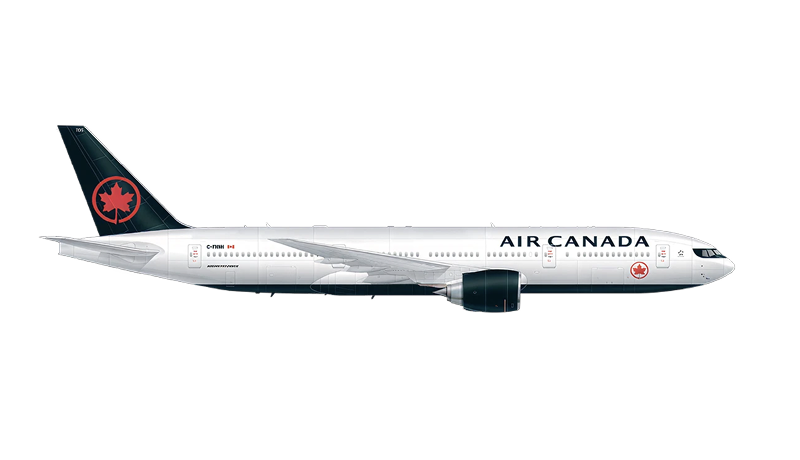
777-200LR Checklist Light

Boeing 777‑200LR

Comprehensive Normal & Abnormal Checklist ASOP
For flight‑simulation training only – NOT for real‑world aviation use.
Version 1.0 – 28 Mar 2026

How to Use

  1. Flows first – complete the panel flow silently.
  2. Challenge/Response checklist – verify critical items.
  3. Read‑and‑do checklist – any blue‑striped (memory) item.
  4. Keep PF heads‑up whenever aircraft is moving.

Legend

  • PF – Pilot Flying PM – Pilot Monitoring
  • Italic – Call‑outs Bold – Memory item/trigger
  • (A) – Automatic call/alert (M) – Manoeuvre

Normal Operations Checklists

1 Power‑Up / Acceptance

ItemAction
Parking BrakeSET
Battery SwitchON (verify voltage)
External PowerON (if AVAIL)
APU SelectorSTART → ON
APU GeneratorON BUS
ADIRU (3 units)ON (allow 10 min align; GPS‑aided)
OxygenTESTED, 100%
Gear Pins / CoversREMOVED & STOWED

2 Preliminary Cockpit Preparation

ItemAction
CVRTEST
Emergency Exit LightsARMED (guard closed)
EICAS RecallCHECKED (no amber/red messages)
ELTARMED

3 Cockpit Preparation (Flows)

Panel FlowAction
Overhead → Forward Panel → Aft PedestalComplete flow pattern
NAV LightsON
Window Heat (L & R)ON
Primary L & R Engine Hydraulic PumpsON
Primary C1 & C2 Electric Hydraulic PumpsOFF
L‑C1‑C2‑R Demand Pump SelectorsOFF
Fuel Pumps (6 total)ON (verify qty - L FWD/AFT, CTR L/R, R FWD/AFT)
L & R Pack Control SwitchesAUTO
Isolation ValveAUTO
Pressurization Mode SelectorAUTO
Probe HeatOFF (until engine start)
Navigation / Display SwitchesNORMAL
Checklist ItemResponse
”Cockpit preparation checklist.”PM initiates
Gear pins & coversRemoved
ADIRUAligned
Fuel qty_____ kg, balanced
Take‑off briefingCompleted
ChecklistComplete
Triple hydraulic system - Left (L engine EDP + ACMP), Center (2 ACMPs + 2 demand ADPs), Right (R engine EDP + ACMP). All at 3,000 psi.

4 Before Start

PF TriggersPM Response
Flight Deck DoorCLOSED & LOCKED
Fuel___ KGS, Pumps ON
Passenger SignsON
WindowsLOCKED
MCPV2 ___, HDG ___, ALT ___
Take‑off SpeedsV1 ___, VR ___, V2 ___
CDU PreflightCOMPLETED (FMC INIT, route, perf)
Rudder & Aileron TrimFREE & ZERO
Beacon LightON
Parking BrakeSET

5 Engine Start (Normal - GE90‑110B1 Autostart)

StepAction
PacksOFF (optional)
START/IGNITION SelectorSTART
FUEL CONTROL Switch (Eng 2)RUN
MonitorN2 rotation - EEC controls autostart sequence
EEC autostartFuel valve opens & igniters energize at ~15‑20 % N2
MonitorEGT rise within 10 s, oil pressure rising
Engine stabilized~20‑23 % N1, ~55‑60 % N2
Engine 1Repeat procedure
Both stablePacks AUTO, verify generators ON
Aborted Start – FUEL CONTROL switch to CUTOFF immediately. The EEC will automatically abort for: hot start, hung start, no EGT rise, compressor stall, or starter duty cycle exceeded.

6 After Start

ItemAction
Generators (L & R)ON
APUOFF (if not required)
Probe HeatON
Anti‑Ice (Engine)AS REQD (ON when OAT ≤ 10 °C with visible moisture)
Anti‑Ice (Wing)AS REQD
Flight ControlsCHECKED (full travel, EICAS check)
FlapsT/O CONFIG (5, 15, or 20)
Stabilizer Trim___ UNITS
Checklist ItemResponse
”After‑start checklist.”PM initiates
Anti‑ice____
Rudder & aileron trimZero
Flaps__/____
Stabilizer trim__ units
RecallChecked
AutobrakeRTO

7 Taxi

ItemLimit
Taxi Speed straight≤ 30 kt (idle thrust)
Turns≤ 10 kt
Nosewheel SteeringTILLER (up to 70°) / RUDDER PEDALS (±7°)
Brake check at first movement “Brakes checked, pressure ___”. Both pilots have tiller controls on the 777.

8 Before Take‑Off – Up to the Line

ItemAction
Flight ControlsCHECKED
MCPVERIFY (V2, HDG, ALT)
FlapsCONFIRM setting, green band on EICAS
V‑SpeedsANNOUNCED
Stabilizer Trim___ UNITS
CabinSECURE

9 Before Take‑Off – Below the Line (entering runway)

ItemAction
TCASTA/RA
Engine Start SwitchesCONT (continuous ignition)
StrobesON
Landing LightsON
TransponderTA/RA
Completion Call”Cabin ready, below‑the‑line complete.”

10 Take‑Off Roll & Initial Climb (Call‑Out Memory)

PMPF
Stabilize at ~40 % N1Advance thrust levers symmetrically
Advance to takeoff thrustTOGA or flex derate
”80 knots""Checked"
"V 1"
"Rotate”Rotate to ~8‑10° pitch
”Positive climb""Gear up”

11 After Take‑Off / Climb

TriggerAction
Positive rate, gear upAutobrake OFF
Acc Alt reachedClimb Thrust (CLB)
Flap retractionOn schedule (VREF30‑based - see table below)
Engine BleedsON
PacksAUTO
10 000 ft”Ten thousand - Lights off.”
Transition altitudeSET STD (1013 hPa / 29.92”) both altimeters
Flap Retraction Schedule:
RetractionMinimum Speed
Flaps 20 → 15VREF30 + 20
Flaps 15 → 5VREF30 + 40
Flaps 5 → 1VREF30 + 60
Flaps 1 → UPVREF30 + 80

12 Cruise (Hourly)

ItemAction
Fuel checkFOB vs Plan (±300 kg)
SystemsEICAS memo - all normal
Waypoint sequenceNEXT & ETA compare
Step climbConsider if fuel burn warrants
Normal cruise Mach 0.84. Fuel flow approximately 4,400–4,500 lb/hr per engine at cruise altitude.

13 Descent Preparation

ItemAction
ATIS / STARRECEIVED & INSERTED
Approach BriefingCOMPLETED
Landing DataVREF ___, Minimums ___
PressurizationLAND ALT ___
Autobrake___ (1, 2, 3, or MAX AUTO)
VREFEntered on CDU APPROACH REF page
NAV RadioSet for approach
RecallCHECKED

14 Approach Checklist

ItemResponse
AltimetersSet (QNH)
Minimums___ ft (RADIO or BARO)
Approach briefingConfirmed
Seat beltsON

15 Landing

Height AGLCall‑outConfiguration
~2 000 ftGear DOWN, Flaps 20Intercept G/S
~1 500 ftFlaps 25 or 30Final config
1 000 ft”Stable / Unstable”Gear DOWN, Flaps 25 or 30, on speed, on path
500 ft”Landing”Final scan
50/40/30/20/10 ft(A)Flare
Speed brake auto‑deploy on touchdown. Reverse thrust at main gear contact, idle reverse at 60 kt. Stable approach criteria at 1 000 ft: on path, VREF to VREF + 20, sink rate < 1 000 fpm, correct config, thrust stabilized.

16 After Landing

ItemAction
Speed BrakeDOWN
FlapsUP
Probe HeatAS REQD
APUSTART (if req)
Engine Start SwitchesOFF
StrobesOFF
Landing / Taxi LightsAS REQD
TransponderSTBY
Weather RadarOFF
Completion Call”After‑landing checklist complete.”

17 Shutdown

ItemAction
Parking BrakeSET
FUEL CONTROL Switches (L & R)CUTOFF
Seat BeltsOFF
Beacon LightOFF
Fuel PumpsOFF
Hydraulic Pumps (C1, C2, demand)OFF
External PowerON (if available)

18 Secure Aircraft

ItemAction
ADIRU (all 3)OFF
Emergency Exit LightsOFF
Window HeatOFF
PacksOFF
APUOFF (if external power connected)
Battery SwitchOFF
Post‑flight reportSent

Abnormal / Memory Items (Extract)

ENGINE FIRE or SEVERE DAMAGE (In‑Flight)

StepAction
1Autothrottle (if engaged) → DISENGAGE
2Thrust Lever (affected) → CONFIRM → CLOSE
3FUEL CONTROL Switch (affected) → CONFIRM → CUTOFF
4Engine Fire Switch (affected) → CONFIRM → PULL
5If FIRE ENG light persists → ROTATE to stop, hold 1 s (discharges bottle 1)
6After 30 s if still lit → ROTATE other stop, hold 1 s (discharges bottle 2)

EMERGENCY DESCENT

ItemAction
Don Oxygen Masks100%, select speaker, establish comms
Announce”EMERGENCY DESCENT” (×3)
Passenger OxygenON (push switch)
Set AltitudeLowest safe altitude or 10 000 ft
FLCHEngage
Thrust LeversCLOSE (idle)
Speed BrakeEXTEND (full)
Target Speed325 KIAS
Transponder7700
Notify ATCObtain QNH
PM calls”2 000 to go” and “1 000 to go” to level‑off
Level offRetract speed brakes, adjust speed
(See QRH for full procedure.)

Quick‑Reference Flap Schedule (GE90‑110B1)

ConfigPlacard Limit (VFE)
Flaps UP340 kt / M 0.87
Flaps 1255 KIAS
Flaps 5235 KIAS
Flaps 15215 KIAS
Flaps 20200 KIAS
Flaps 25190 KIAS
Flaps 30175 KIAS
Takeoff flap settings: 5, 15, or 20 Landing flap settings: 25 or 30 (30 standard; 25 for strong crosswind)

Flap Manoeuvre Speeds

Flap PositionManoeuvre Speed
Flaps UPVREF30 + 80
Flaps 1VREF30 + 60
Flaps 5VREF30 + 40
Flaps 15VREF30 + 20
Flaps 20VREF30 + 20
Flaps 25VREF25
Flaps 30VREF30

Revision History

RevDateNoteAuthor
1.028 Mar 2026Initial checklist issueACVA Team

Disclaimer

These checklists are abridged adaptations of Boeing public‑domain procedures for simulation. They do not replicate proprietary FCOM text and must not be used for commercial operations.